
“We’re on a mission”
A simple framework to help you network and stand out from a sea of engineers just like you

This week I’m writing to you from the heart of space diplomacy and sustainable development. I’m attending the General Assembly of the United Nations Committee on the Peaceful Uses of Outer Space at the Office for Outer Space Affairs in Vienna. We all call it the UN COPUOS meeting.
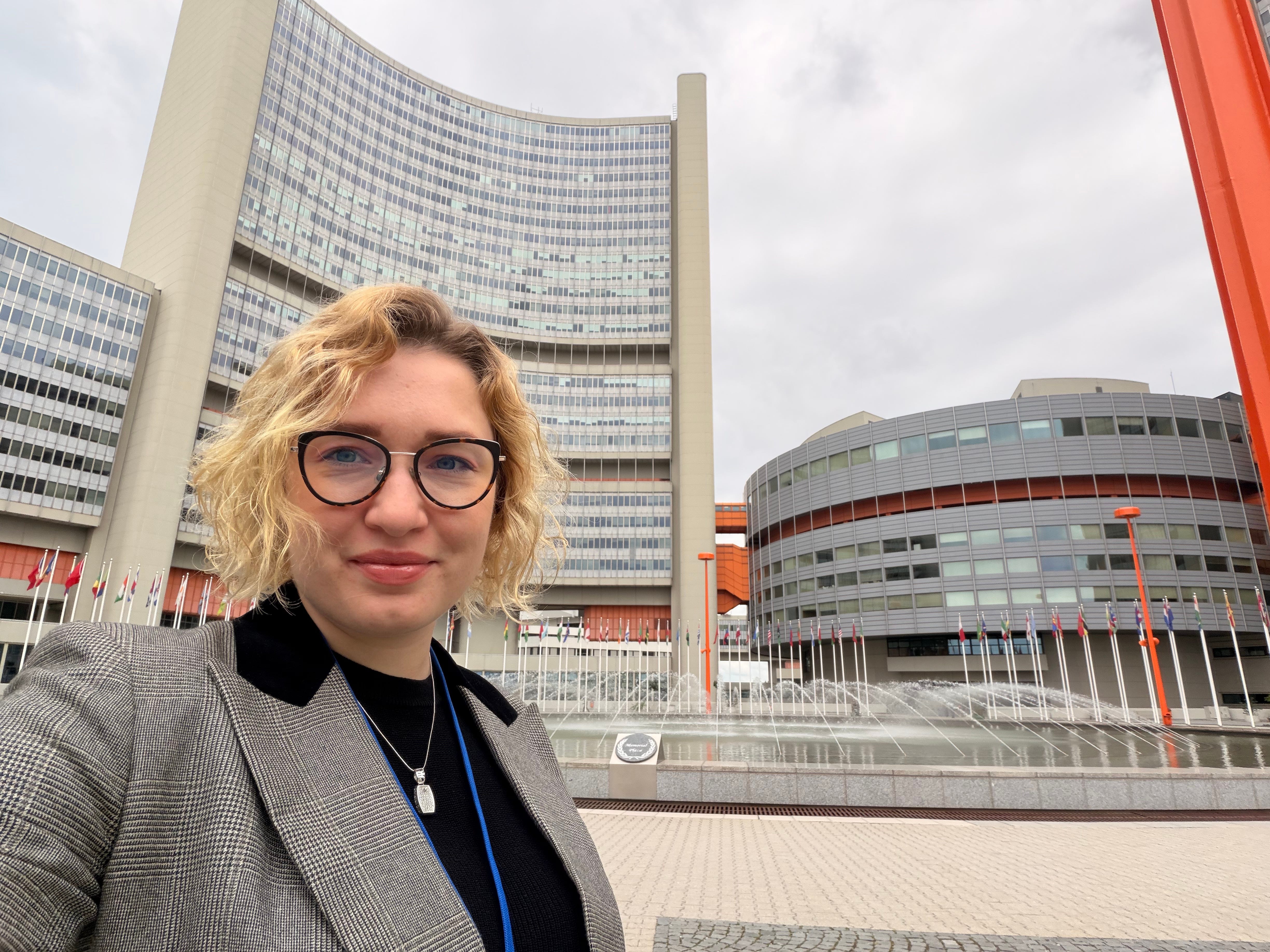
There are more than 150 delegations and non-governmental organisations here. Everybody has a seat at the big table and something important to say. Everybody wants to shake hands with everybody. Everybody is busy and important.
Walking through the corridors feels a bit like entering a beehive (I guess). People move quickly between meeting rooms. Conversations happen in small clusters that form and dissolve just as quickly. One moment you’re speaking with a representative of a space agency, the next with a diplomat, an NGO founder, a professor or someone working on humanitarian projects on the other side of the world. Every lunch break feels like a networking event, and every networking event feels a little bit like a negotiation.
Yesterday alone, I introduced myself some 40 times. Some conversations lasted less than two minutes. Others turned into discussions about partnerships, healthcare access and the future of space technology.
To cut through the crowd, I’m using a simple communication framework. It helps me stand out from the rest of the people introducing themselves exactly like everyone else. Because the truth is that many people here have similar backgrounds and occupy similar positions in different countries and organisations. If I start with my job title, I immediately become one more person in a room full of people with impressive titles.
I need to grab their attention and quickly identify who is genuinely interested in what I’m doing. Equally importantly, I need to filter out people who are not. Time is limited for all of us, and a good introduction should respect that.
The framework is simple.
“I’m on a mission”
It works like this:
I’m on a mission to {your mission} to achieve {your audience’s interests}.
I am at UN COPUOS in my capacity as Director of the Global Summit of the AstroAid Foundation. We are a non-governmental organisation aiming to use space-enabled technology for global healthcare access. So my mission statement here is:
“I’m on a mission to democratise healthcare access through space technology to reach the most vulnerable and underserved communities.”

What I like about this framework is that it shifts the conversation away from what you do and towards why you do it.
Most people introduce themselves through their role.
“I’m an aerospace engineer.”
“I’m a project manager at.”
“I’m a PhD student.”
The problem is that roles are rarely memorable. A mission, however, tells people what change you’re trying to create in the world. It tells them why they should care. And allows them to connect (or not, and save time). More importantly, it gives them a reason to continue the conversation.
Where you can use it in STEM
Just like the UN COPUOS meeting, most STEM conferences are packed with people who have similar backgrounds, similar interests and often similar job titles. There are simply too many people to go into details when you first meet. Whether you’re introducing yourself, your project or your organisation, this framework gives people a quick understanding of what matters to you.
It is also particularly useful for pitches. Start-ups use mission statements all the time, but researchers can benefit from them just as much. Whether you’re pitching a research proposal, introducing a new project or presenting an innovation, “We’re on a mission” can work both as an opening statement and as a memorable conclusion.
The framework is equally useful when you’re representing your organisation at a trade fair, exhibition or conference booth. Instead of waiting for people to ask what you do, you can start a conversation by telling them what you’re trying to achieve.
I’ve also tested the framework and seen it work surprisingly well in job interviews. Engineers often answer the famous “Tell me about yourself” question by giving a chronological account of their education and career. A mission statement immediately gives direction and purpose to your answer. Even if you don’t feel comfortable saying the phrase as is during an interview, preparing it at home will help you formulate more engaging answers.
For example:
“I’m on a mission to make complex technical ideas accessible to decision-makers.”
Or:
“I’m on a mission to make aviation safer through better materials testing.”
Or:
“I’m on a mission to understand how radiation affects astronauts so we can enable long-term human exploration of the Moon and Mars.”
(Or “I want to be a part of the mission to…”)
The same idea can strengthen your LinkedIn profile, your grant applications and even the way you introduce a research project to potential collaborators. Whenever you need people to understand why your work matters, a mission statement can become the anchor of your story.
Sitting in Vienna this week, surrounded by delegates from around the world, I’ve been reminded of something simple. People rarely remember your exact job title. They rarely remember your organisational chart position. They rarely remember your department.
But they do remember what you’re trying to achieve.
So next time someone asks what you do, try answering a slightly different question.
What mission are you on?
Your Coach,
Yulia
Talk about a mission statement, this looks interesting!
It makes me think about how a “mission statement” functions almost like a performance score, something you step into and repeat until it becomes legible to others. In that sense, COPUOS sounds less like a marketplace of ideas and more like a theater of compressed identities.