
What happens when everyone has authority but nobody has attention
Observations from a communication coach at the United Nations

Whoever said that as people become more senior, they automatically become better speakers?!
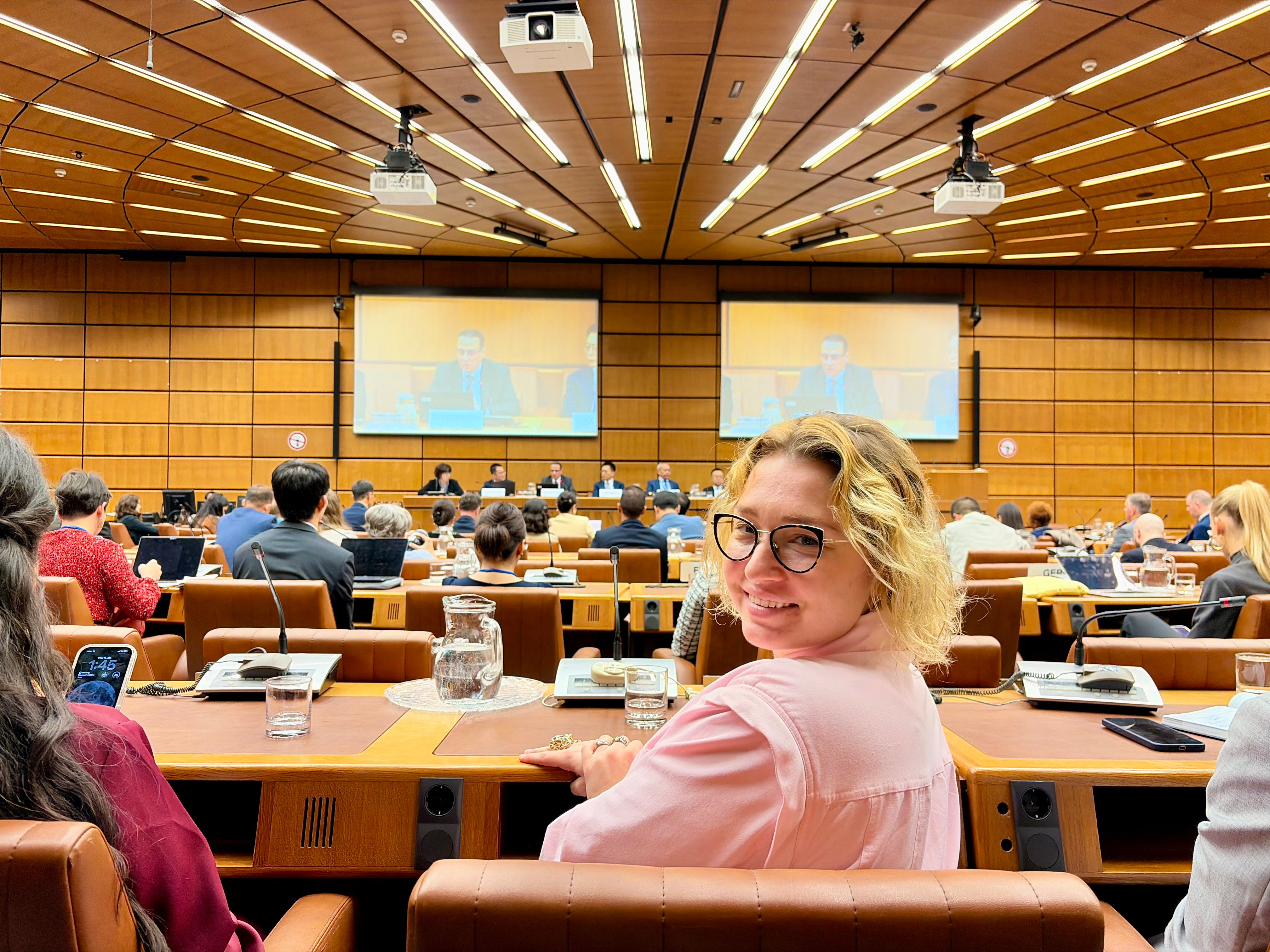
Last week, sitting at the UN Committee on the Peaceful Uses of Outer Space (COPUOS), I found myself questioning that assumption. A lot.
Observation #1
I listened to the head of a major European space organisation deliver a keynote. By any measure, this was a person at the very top of their field: decades of experience + big achievements + international influence.
And yet, within the first minute, the room was gone.
No one was listening. No one was even looking up. Except for me.
The speech was being read, word for word, from a prepared text.
The expertise was there.
The authority was there.
The audience was not.
Observation #2
Later that day, I watched 2 delegations spend 25 minutes debating a single sentence in a draft text. The rest of 150 delegations were silent. There were political reasons behind the disagreement, of course. But there was also a communication problem. Throughout the session, most delegates were reading prepared statements at one another rather than engaging with one another.
It reminded me of something we rarely discuss in STEM, government, and international organisations:
Communication is not a reward for seniority.
It is a skill.
And like any skill, it requires deliberate practice.
Too often, we assume that brilliant scientists, engineers, executives, and policymakers will naturally become effective communicators as they progress through their careers.
Many do not. I would argue that most do not.
Observation #3
Out of all the speeches and keynotes I heard at COPUOS, only 2 stood out as engaging and clever. Real speeches. Not written text read out loud.
The irony is that I understand why:
At the level of national delegations, government agencies, and international organisations, every word carries weight. Statements are reviewed, negotiated, approved, and carefully crafted. Nobody wants to accidentally create a diplomatic issue, commit to something unintentionally, or send the wrong signal.
Reading feels safe.
Reading feels controlled.
Reading feels precise.
But there is a huge hidden cost.
The moment people start reading, they stop communicating. They have no capacity to read the room. To pace their delivery. To check and keep the attention. The room disengages.
And what was gained in control is lost in impact.
Solution
There is a simple remedy that I teach engineers and scientists.
Do not memorise the exact words.
Memorise the message.
Know the three or four points you absolutely must communicate. Keep the approved wording accessible. But speak to people, not to paper.
You will still be accurate. You will still be compliant.
And people might actually listen.
Observation #4
As I sat in Vienna, another thought kept coming back to me.
Think about the cost.
Hundreds of highly qualified professionals had travelled from all over the world. Scientists, diplomats, engineers, lawyers, policymakers, agency representatives. Many had crossed oceans and continents to be there for 2 weeks.
The flights cost money.
The hotels cost money.
The conference infrastructure cost money.
Most importantly, their time cost money.
And yet, during many speeches, the room was mentally elsewhere.
People were checking emails, reading documents, preparing interventions, or looking at their phones. Leaving the room, too, to have small meetings in parallel.
This is a productivity problem.
If (almost) nobody is listening, what exactly are we accomplishing?
If the purpose of gathering experts from around the world is to exchange ideas, build understanding, influence decisions, and move international cooperation forward, then communication cannot be treated as an afterthought.
The higher the stakes, the more communication matters.
Conclusion
The greatest communication challenge facing many institutions today is that they have forgotten how to communicate in a way that makes others want to listen, assimilate, and respond. Not merely sit through meetings only to read the proceedings later.
Your Coach,
Yulia
This is a very interesting article, which, as a layperson, has prompted me to reflect on a few things, especially at a historic moment like the present, when there is a need to develop a clear and up-to-date “space law” to protect the interests of all mankind, not just those of a few.
Observation 1. Recalling McLuhan’s ideas, I thought that the speech by a high-level speaker at the COPUOS meeting is best described by the Canadian philosopher and sociologist’s phrase, “the medium is the message.” The paper and the words being read are of lesser importance than the person reading them: he is simultaneously the medium and the message. And not the speaker as an individual—however skilled and brilliant he or she may be—but solely as a representative of the space agency he or she represents. At that moment, he or she represents the international organization that sent him or her there, and his or her presence is more important than the speech itself.
Observation 2. In this case as well, it is not so much the speakers’ skill and preparation that matter, but rather the influence of the organizations that sent them there. The interaction between people becomes political, and as it drifts away from technical matters, the listeners’ interest also wanes.
And as people get older, I don’t believe their oratory skills improve: what increases is only the desire to maintain their role and responsibilities within the framework established by their organization, avoiding dangerous deviations from corporate procedures—in the style of a “yes man.”
Observation 3. I don’t know, but I can’t help thinking that perhaps “speaking sincerely” rather than “merely acting” at a meeting is not only risky but perhaps not even conceivable. Behind a written speech, there are many people who have crafted it and perfected it for a specific purpose: to represent the position of an organization, not that of a single individual, no matter how brilliant.
Observation 4. An assessment of the costs and complex logistical organization of international conferences can suggest two ideas, each with a different meaning. On the one hand, these opportunities for professionals to meet are (and should always be) ways to exchange ideas and different points of view on the topics at hand—a cultural exchange, in other words.
In the other view, they are merely mechanisms for reaffirming political concepts and interpretations of the issues. A power struggle, where, once again, the medium is the message.
Another great piece, Yulia! A longstanding problem with institutions like the UN, in my opinion, is weak cohesion around connective communication throughputs and assets. While they kind of intuitively understand the power of standing ten toes down on storytelling, research and evidence, neuromarketing, and powerful narrative arcs—only some agencies (e.g., UNICEF) put the money and effort in these areas. And even then they have limits; once people get in the room or role they think the job is done.
The organization and many of its personnel, as a whole, remind me of some of the people I’ve come across in STEM academia: Brilliant, hungry, committed and determined, but also risk adverse, myopic and full of expectations that their unique brand of genius will be understood and supported…without having to communicate or negotiate around it. Both those things require passionate vulnerability, and there’s a real stubbornness in many rooms to deliver from such a place.